Planning a two-week visit to Australia is like trying to cover the United States in that period of time—there’s no way to cover everything.
I researched itineraries online to determine which places we wanted to see and booked flights between them. Sydney to Uluru/Ayers Rock to Melbourne to the Great Barrier Reef. We tacked on a few days in the Philippines at the end to help me reach my goal of traveling to 50 countries before I turn 50. (Only five to go before October 2025.)
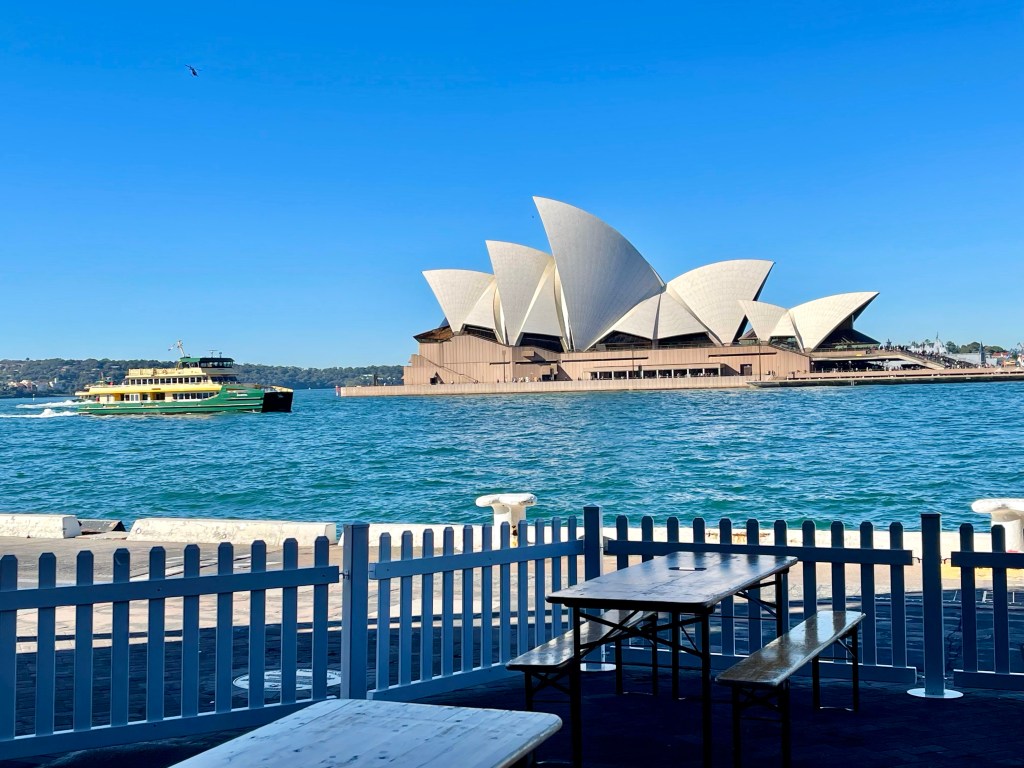
We arrived in Sydney after an overnight flight to sunshine and blue skies—after the sun came up, anyway. The only photos I took that day were of the opera house, and the first one was so perfect I didn’t want to take another one the whole trip. I didn’t have to, because Rob travels with several cameras, so I let him be the trip photographer.
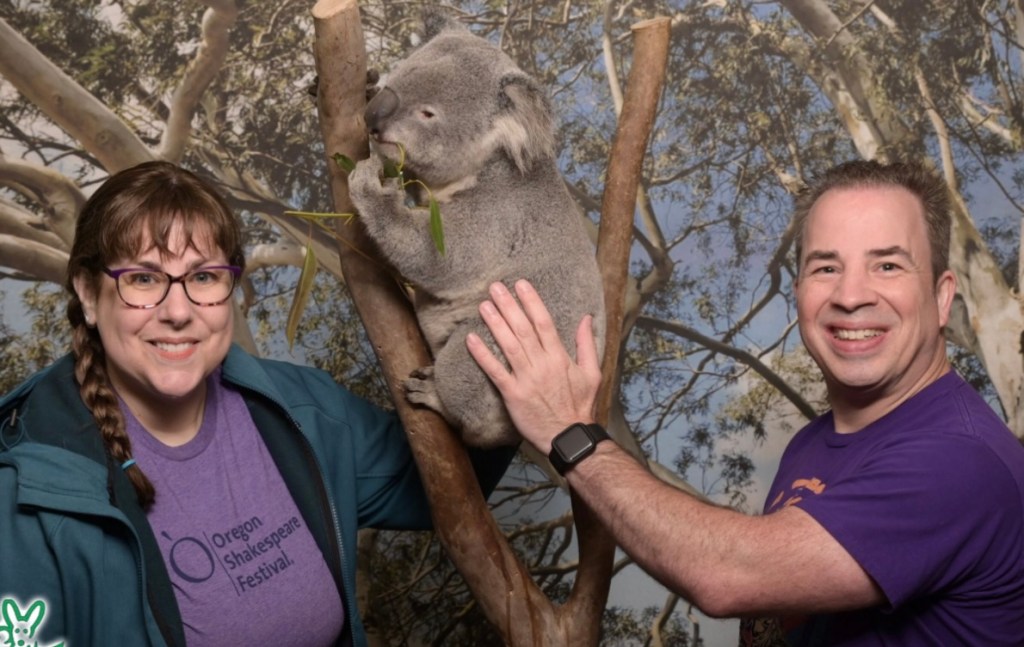
Our second day began with a visit to Featherdale Sydney Wildlife Park where we met a koala! (I keep finding myself saying “koala bear” even though I know that’s as inaccurate as saying “orca whale.”) I felt like the trip had peaked. How could it get better than that?
The next stop was Uluru, a Land Back success story, with ownership having been restored to the Aṉangu people in 1985. Its name has been changed from Ayers Rock to Ayers Rock/Uluru, and then to Uluru/Ayers Rock. I’d rather just call it Uluru, but found that if you don’t add the Ayers Rock part, people don’t know what you’re talking about.
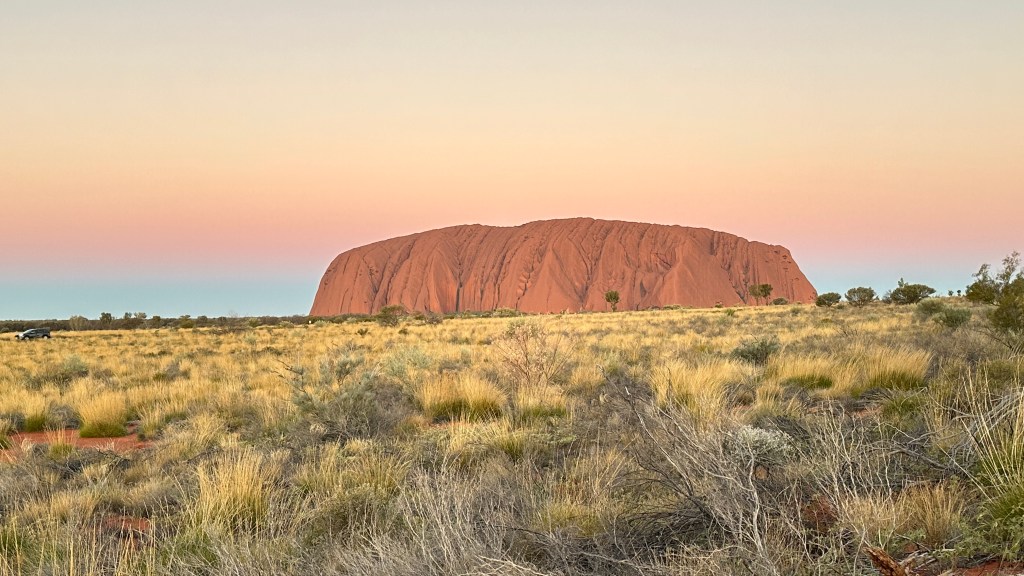
Uluru is a massive sandstone monolith in the Red Center of Australia’s Northern Territory. Western tourists used to travel there to climb on top of it, but now visitors are restricted to a base walk of a little over 6 miles. It’s pretty wild to see it in the distance from a plane or even a car, towering over mostly flat land.
A short distance away is another geological marvel called Kata Tjuta, which means “many heads,” because the sedimentary rock formation consists of 36 domes that visitors can trek through.
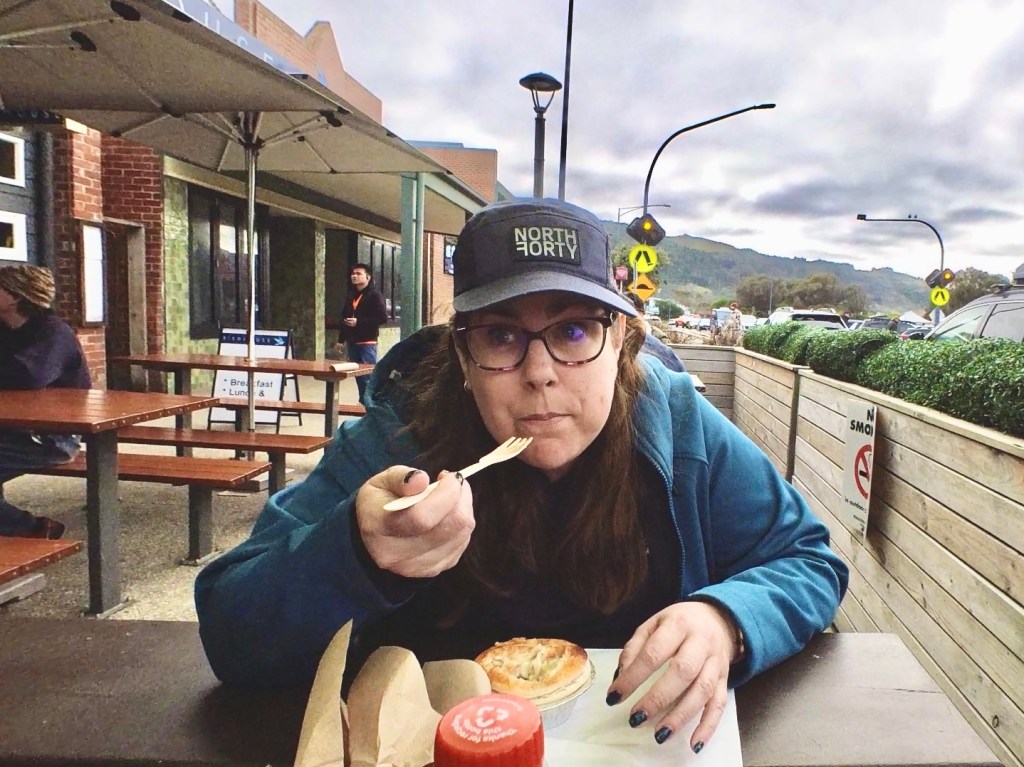
Next we headed to Melbourne, where we traveled along the Great Ocean Road to see another pile of rocks: The Twelve Apostles. Along the way, we saw koalas and kangaroos in their natural habitat, and stopped in Apollo Bay to eat a scallop pie, which was the best thing I ate in Australia UNTIL I had chargrilled jerk tiger shrimp tacos in Cairns.
In Cairns we took a glass bottom boat and a semi-submersible to look at the Great Barrier Reef while staying dry. On Green Island, we also visited Marineland Melanesia—home of Cassius, the world’s largest and oldest captive crocodile. The sanctuary inexplicably bears a plaque with this quote from Chief Seattle: “What is man without the beasts? If all the beasts were gone, man would die from a great loneliness of spirit. For whatever happens to the beasts, soon happens to man. All things are connected.”
It’s here I will mention that I try very hard to be an ethical tourist and not support the exploitation of land or animals in the places I visit. I didn’t like seeing crocodiles in enclosures, but felt slightly better when I learned that they were nuisance animals who otherwise would have been killed.
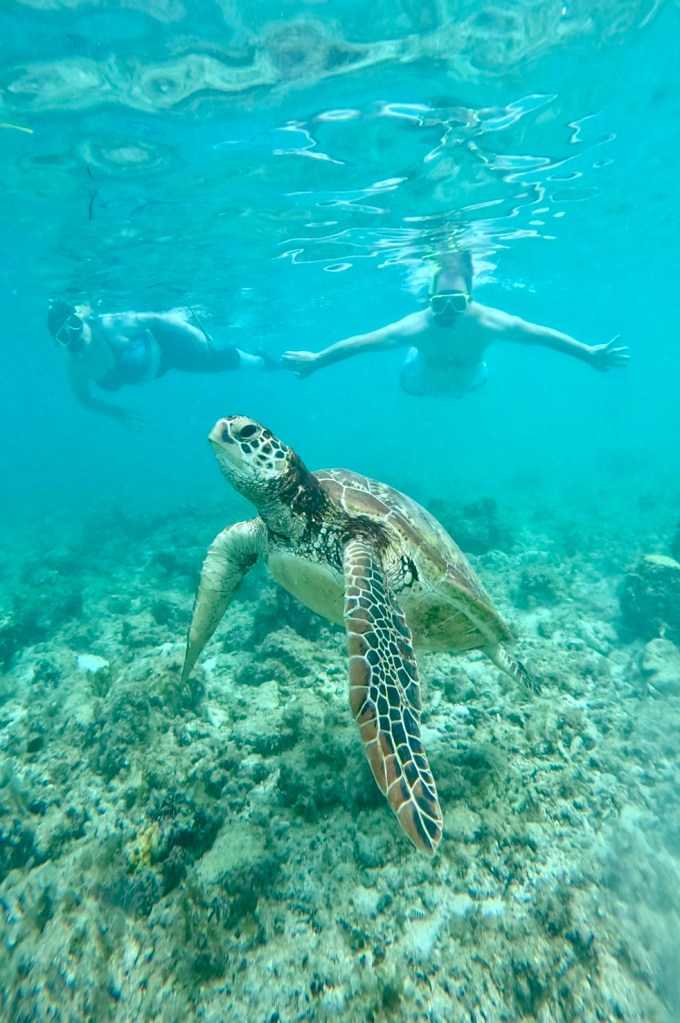
After the Great Barrier Reef we went to Cebu Island in the Philippines, where we were met by our guide Alfe from Snizzz Tours. In Moalboal, I realized my lifelong dream of swimming with a sea turtle. The snorkeling spot also featured a drop off where you could swim among a wall of thousands of shimmering sardines. When the itinerary said “swim with sardines,” I didn’t think it sounded very exciting, but it was otherworldly.
Also in the Philippines, I found myself way out of my depth on a “canyoneering” adventure that included ziplining and cliff-jumping into crystal blue pools. Don’t get me wrong, I’m not scared of heights or water. I was terrified of slipping and falling on the wet rocks and breaking my leg (again). Our two guides, Gerald and Gerwin, acted as human handrails, and it’s a good thing Rob didn’t need any assistance because I needed both of them to get me out of there alive.
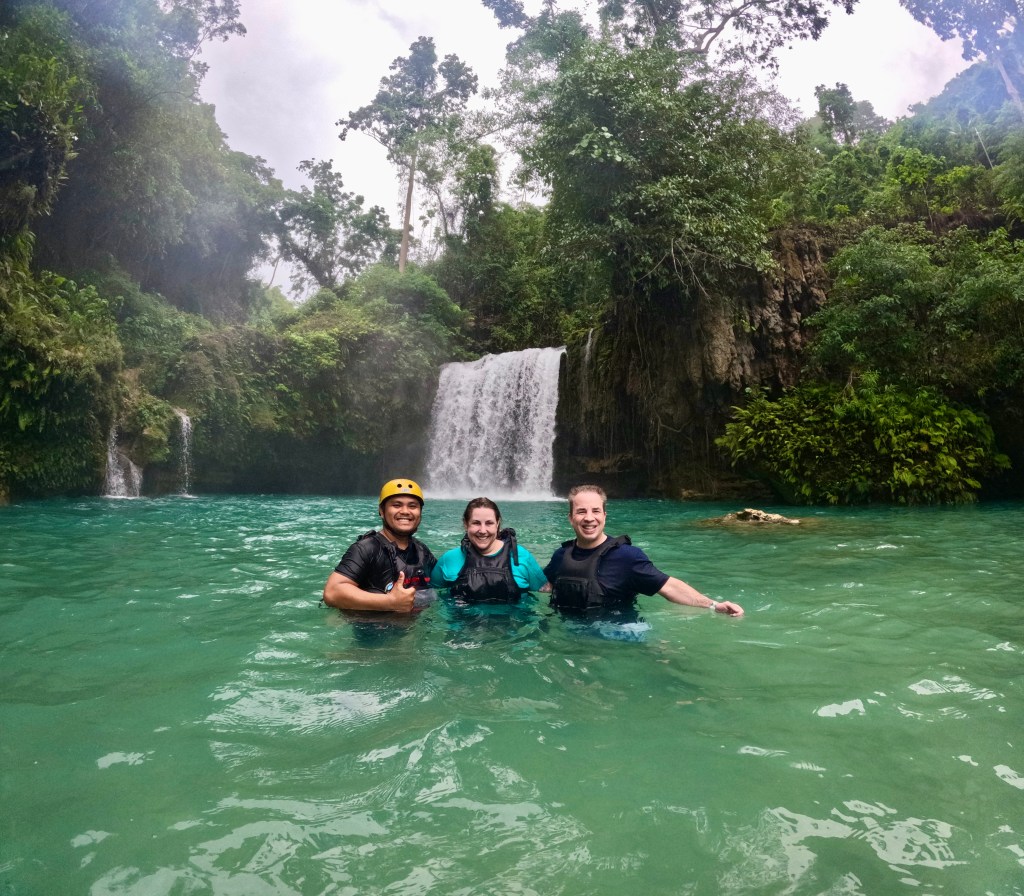
My favorite part was floating on my back in the water, because that allowed me to look up at the scenery rather than down at my feet to make sure I didn’t trip over them.
That brings me to our final aquatic adventure, swimming with whale sharks. I have mixed feelings about this, because I generally oppose anything that interferes with the ecosystem. These whale sharks have been trained to stay near the shores of Oslob. Every morning, outrigger canoes full of hundreds of tourists are paddled out to them, where fishermen toss krill into the water to get them to swim past us.
Would I prefer for these whale sharks to migrate and find their own food as nature intended? Absolutely. But I can’t deny the value of this tourist industry in an extremely impoverished country. The outfit seemed to me to be as whale-friendly as it could be. They don’t use motorized boats. Visitors are instructed not to touch the whale sharks, and they don’t let you use flippers or even a snorkel, so you can’t travel very far from the bamboo outrigger. And they limit the number of visitors to ensure the whale sharks aren’t overfed.
On our last afternoon in the Philippines, we snorkeled off Sumilon Island, which in my opinion, was as good as the Great Barrier Reef. We saw more kinds of fish than I can name, including a couple of my favorites—parrot fish and clown fish.
It was a whirlwind of a trip and got us excited for our next adventure.










 Kari Neumeyer